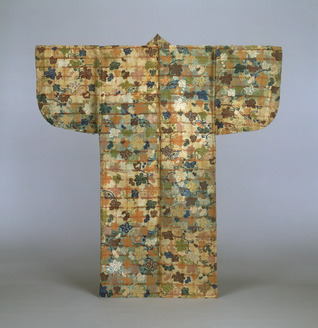
This item is primarily worn under clothing by males, revealing its sleeves only when the outer garment is removed. Various patterns are meticulously worked into it. The hemline features a shallow leek and white stripe design, and a grid pattern is used as a border, with grapes depicted in embroidery. The craftsmanship is brilliant. (090526_h09)
主として男性役が表着(うわぎ)の下に着用する着付の小袖(こそで)。表着(うわぎ)の袖(そで)を脱いで片袖を見せるような着付をし、さまざまな模様が工夫された。締め切りの糸で浅葱と白の段模様とし、格子模様を地紋に織り出し、葡萄(ぶどう)の蔓(つる)を縫取織(ぬいとりおり)で表した、華やかな意匠(いしょう)である。(090526_h09)
View the original at Japan Search →Article 1 gives three grounds for regulating a sign: forming good landscape, maintaining scenic character, and preventing danger to the public. Article 3 then lets a prefecture prohibit outdoor advertising outright, by ordinance, in named categories of place.
The cool part. Read the list in Article 3 and it stops being an advertising law. The places where signage can be banned include landscape districts, scenic districts, preservation districts for groups of traditional buildings, the surroundings of designated Important Cultural Properties, and historic sites, places of scenic beauty and natural monuments. The statute protects the view by removing the sentences written across it.
Verify at e-Gov 法令検索 →Use it A motif small enough to blind-deboss, which is where restraint actually shows.
Description source: museum curator text, translated — not generated