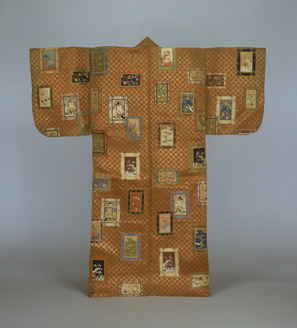
Decorative motifs of seven treasures interconnected are all woven in gold thread. The upper decorative motifs have various intricate patterns that appear even on the central screen of the crest. From the Edo period middle class onwards, daimyo who appreciated art, did not limit themselves to weaving flowers and birds, but also wove various objects (kibutsu) with distinctive personality in Tang weaving, which was highly valued. (Year of production unknown)
地紋(じもん)の七宝繋ぎ模様をすべて平金糸で織り出し、上紋(うわもん)は、額の中の画面にも、さまざまな細かい模様が織り出されている。江戸時代中期以降、能を好んだ大名家では、花鳥だけではなくさまざまな器物(きぶつ)を織り出した個性ある唐織を特別にあつらえさせた。(制作年不詳)
View the original at Japan Search →Article 1 describes the Ainu as the indigenous people of the northern part of the Japanese archipelago and of Hokkaido in particular, and cites international circumstances concerning indigenous peoples as a reason for acting. It requires the government to set a basic policy, and lets municipalities draw up regional plans for approval by the Prime Minister.
The cool part. The definition in Article 2 is the part to sit with. Ainu culture means the Ainu language, and the ways of living, music, dance, crafts and other cultural products inherited among the Ainu, and cultural products developed from these. That final clause refuses to freeze the culture at a date, and treats what is made next as equally the thing being protected. The Act then reaches into trademark law, reducing or waiving registration fees for regional collective trademarks used by approved projects.
Verify at e-Gov 法令検索 →Use it The border is the idea. Use it as an edge treatment and leave the centre empty.
Description source: museum curator text, translated — not generated