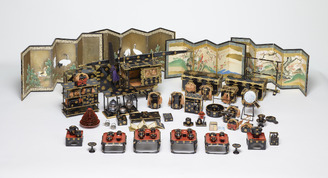
These ornate dolls were passed down in the Matsudaira clan of the Himeji domain. Three-petaled chrysanthemum designs in gold lacquer are intricately painted on every item, meticulously created for traditional wedding ceremonies. These grandiose doll sets are an impressive work of art in their own r…
<p>出雲松江藩の藩主であった松平家に伝来した雛道具です。本式の婚礼調度をどこまでも精巧に作らせた雛道具には、いずれにも三つ葉葵紋の金蒔絵が施されています。大名家の婚礼道具をそのまま縮小したような、豪華な品揃えが圧巻の作品です。<br /></p>
View the original at Japan Search →A weapons statute that contains the most important art registry in the country. Article 2 defines a sword by measurement: a blade of fifteen centimetres or more for a sword, spear or naginata, five and a half for a dagger. Article 14 then carves out an exception. The prefectural board of education registers old firearms of value as art or antiques, and swords of value as art, on the basis of an appraisal by registration examiners appointed for their scholarly knowledge.
The cool part. A Japanese sword is lawful to own because it has been certified as art. Not because it was disarmed, not because it was licensed as a weapon. The judgement is made by the board of education, and Article 14 then requires the board to notify the prefectural public safety commission of what it has decided. The culture side rules, and the police are informed afterwards. Fail the appraisal and the same object becomes contraband.
Verify at e-Gov 法令検索 →Use it Take the ratio, not the picture. It sets a page better than a grid does.
Description source: museum curator text, translated — not generated