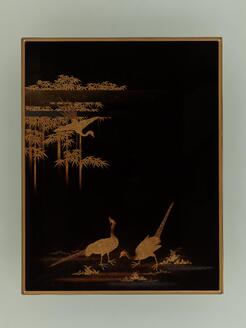
The reverse side of the lid bears a seal, and it is known that this is a work by the well-known salt-painting artist, Somenosuke Takeshige. The exterior of the box is decorated with a refined image of a bird in a bamboo forest, depicted through the technique of salt-painting. The intricately drawn features of the bird and the bamboo leaves allow one to appreciate the skill of Somenosuke Takeshige as the artist.
蓋の裏側に銘があり、印籠蒔絵師として有名な塩見政誠の作であることが分かる。箱の外側には研出蒔絵により、竹林に雉子の図柄が精緻に表わされている。細かく描かれた雉子の羽や竹の葉の表現には、研出蒔絵の名手であったという塩見政誠の技量を看て取ることができる。
View the original at Japan Search →A weapons statute that contains the most important art registry in the country. Article 2 defines a sword by measurement: a blade of fifteen centimetres or more for a sword, spear or naginata, five and a half for a dagger. Article 14 then carves out an exception. The prefectural board of education registers old firearms of value as art or antiques, and swords of value as art, on the basis of an appraisal by registration examiners appointed for their scholarly knowledge.
The cool part. A Japanese sword is lawful to own because it has been certified as art. Not because it was disarmed, not because it was licensed as a weapon. The judgement is made by the board of education, and Article 14 then requires the board to notify the prefectural public safety commission of what it has decided. The culture side rules, and the police are informed afterwards. Fail the appraisal and the same object becomes contraband.
Verify at e-Gov 法令検索 →Use it Palette for a single-colour run: one ink, heavy stock, nothing else on the sheet.
Description source: museum curator text, translated — not generated