Huang Goodman · Art Forgotten

Art Forgotten

Art from public museum collections. A mismatched real Japanese law, and some other factoids.

Every object, image and description comes from the museum's own catalogue record, and every object links to its original. Japanese records are machine-translated into English; the museum's Japanese is kept beside the translation because it is the authoritative form. Each law carries its official number and links to e-Gov 法令検索, the Japanese government's statute database.

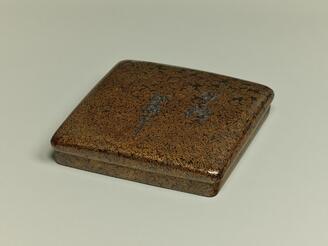
忍蒔絵硯箱
{忍蒔絵硯箱 · 伝本阿弥光悦作 · 江戸時代・17世紀 / Edo period, 17th century · Japan Search · 国立国会図書館}
Endurance Inkstone Painting This catalogue introduces the art of inkstone painting, a traditional Japanese artistic expression. The term "endurance inkstone painting" refers to the unique and challenging process of creating this art form. The artist begins by selecting an inkstone, a flat, round, and polished stone used for grinding ink. The inkstone is carefully cleaned and prepared for use. Once the ink has been ground, the artist applies it to a sheet of paper with a brush. The paper is then placed on the inkstone and gently pressed down, allowing the ink to transfer from the stone to the paper. This method requires great patience and skill from the artist. Each stroke must be deliberate, as the ink can only be applied once. The artist must also ensure that the ink is of the correct consistency and that the paper is properly prepared to receive the ink. Any mistakes made during this process cannot be corrected. The resulting artwork consists of intricate and delicate designs, created through the artist's mastery of this demanding technique. The inkstone's smooth surface allows for a variety of textures and shading, resulting in a unique and visually striking piece. Endurance inkstone painting is a testament to the dedication and artistic vision of the Japanese masters who have preserved this ancient art form. Through their patient and meticulous work, they have created a body of art that continues to inspire and captivate audiences today. · Transmission of Amitaghora by Obaku Amogō.

The teapot in the collection "Anthology of Ancient and Modern Japanese Poetry (Waka Shū)" represents the well-known Japanese poem, "michi no ku no shino bubujuri dare yō ni midaremu to omou ware naranaku ni." The exterior is covered with gold leaf lacquer, and the lid has the characters "tare yue ni" in the center. The calligraphy is not traditional, but the artist demonstrates a bold and innovative spirit.

『古今和歌集』の有名な和歌、「みちのくのしのぶもぢずり誰ゆゑに みだれむと思ふ我ならなくに」を表現した硯箱。表面は金平(ひら)蒔絵による忍草で埋め尽くしており、蓋表中央に「たれゆえに」の文字を配している。文字をデザインの中心に据えた、伝統的な蒔絵にはない、斬新な意匠である。

View the original at Japan Search →
The law
図書館法
Library Act
昭和二十五年法律第百十八号 · Act No. 118 of 1950

Article 3 tells libraries what to gather, and the list is wider than books: local materials, local administrative records, works of art, records and film. Article 3 also requires interlibrary lending, travelling collections and mobile libraries, so that the holdings move toward the reader rather than waiting.

The cool part. Article 17 is one sentence and admits nothing. A public library may not collect an admission fee, or any consideration whatsoever, for the use of library materials. Free is not a policy that a budget round can revisit, it is the statute. Article 26 is stranger still: the state and local authorities must not interfere in the work of a private library, and must not give it a subsidy. Independence is protected by withholding the money.

Verify at e-Gov 法令検索 →

Use it Two-colour foil on uncoated stock gets you most of this at production cost.

Description source: museum curator text, translated — not generated