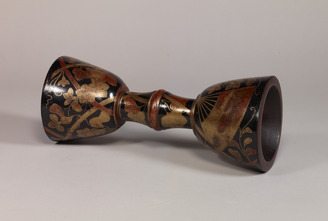
The body of a taiko drum used for entertainment. The surface is coated in black lacquer, with monochrome ink paintings interspersed, depicting bamboo fences and the pattern of a setting sun. The technique belongs to the Tō-yō period and is classified as a type of Kōdai-ji ink painting. The design is based on a chapter from the Genji Monogatari about the setting sun. Few examples of literary craftsmanship exist in Kōdai-ji ink painting, making it valuable.
能楽に用いる大鼓(おおつづみ)の胴。表面は全体を黒漆塗として、平(ひら)蒔絵に絵梨子地(えなしじ)を交えて、竹垣に扇面、夕顔の文様を表わす。技法は桃山期に流行した高台寺(こうだいじ)蒔絵の系譜に属しており、文様は源氏物語夕顔の帖を主題としている。高台寺蒔絵に文学意匠の作例は少なく、貴重である。
View the original at Japan Search →A national statute written for one city. Article 1 recites the beauty of Kyoto and its historically, culturally and artistically important position in the world, and gives two purposes: to raise international culture and serve the ideal of permanent world peace, and to contribute to the economic recovery of Japan. It was passed five years after the war ended.
The cool part. Article 3 lets Kyoto designate culture tourism preservation districts and, by ordinance, prohibit building, rebuilding, removal, changes to the shape of the land and the cutting of bamboo, trees and stone, with compensation for ordinary loss. Then Article 4 does something statutes almost never do. It places a duty on the mayor personally: in the spirit of local autonomy, and with the cooperation of residents, the mayor must engage in ceaseless activity to complete the city. Nara received its own Act, number 250, the day before.
Verify at e-Gov 法令検索 →Use it A motif small enough to blind-deboss, which is where restraint actually shows.
Description source: museum curator text, translated — not generated