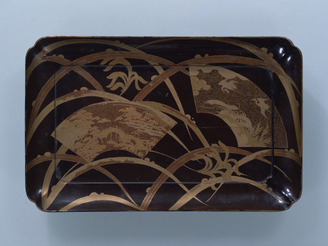
A cauldron is used with incense burners and bells to burn incense. This work features a painted clay cauldron with a peach-blossom design, combining painting and needlework on its surface, which depicts a fan-shaped motif. This piece belongs to the high-altar painting style popular during the Tosei-era Temple Gardens, a characteristic feature being the intricate depiction of landscapes on the fan-shaped surfaces, making it a rare example of traditional art.
香盆は香炉や香合など、香を焚くための道具をのせて使用します。本作は平蒔絵に絵梨子地、針描を併用して芒に扇面を表しています。桃山時代に流行した高台寺蒔絵に属する特徴といえますが、扇面に風景を細かく描き込むなど、伝統的な様相を合わせもつところが珍しい作例です。
View the original at Japan Search →Article 3 tells libraries what to gather, and the list is wider than books: local materials, local administrative records, works of art, records and film. Article 3 also requires interlibrary lending, travelling collections and mobile libraries, so that the holdings move toward the reader rather than waiting.
The cool part. Article 17 is one sentence and admits nothing. A public library may not collect an admission fee, or any consideration whatsoever, for the use of library materials. Free is not a policy that a budget round can revisit, it is the statute. Article 26 is stranger still: the state and local authorities must not interfere in the work of a private library, and must not give it a subsidy. Independence is protected by withholding the money.
Verify at e-Gov 法令検索 →Use it A motif small enough to blind-deboss, which is where restraint actually shows.
Description source: museum curator text, translated — not generated