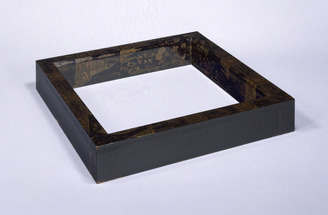
This basin is used for washing hands and making up inside a room. It is an item used with a sink or a receptacle to hold the water. The surface is decorated with a monochromatic painting style, featuring autumn flowers such as chrysanthemums, peaches, and female flowering plants. It is a typical work of the Katsura period's high-style temple painting genre.
楾は、室内での洗面や化粧に使う手水道具。湯や水を注ぐためのもので、それを受ける角盥と揃いで使用する。表面には平蒔絵に絵梨子地を交えて菊、桔梗、女郎花などの秋草を賑やかに描いている。桃山時代に流行した高台寺蒔絵の典型的な作品である。
View the original at Japan Search →Japan implementing the 1970 UNESCO Convention. When a foreign state reports that cultural property has been stolen from an institution, the Ministry of Foreign Affairs notifies the education ministry, which designates the object as specified foreign cultural property, after consulting the trade ministry. Importing a designated object then requires approval under the foreign exchange and trade law.
The cool part. Article 6 quietly rewrites private law. Under the Civil Code a good-faith purchaser is normally secure against a recovery claim after two years. For designated stolen foreign cultural property, the victim may demand recovery from two years after the theft until ten years have passed. Buying in good faith does not settle the question for a decade, which is roughly how long it takes a stolen object to surface on a legitimate market.
Verify at e-Gov 法令検索 →Use it Take the ratio, not the picture. It sets a page better than a grid does.
Description source: museum curator text, translated — not generated