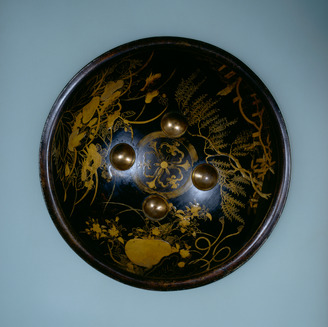
This cowhide has been shaped into water and painted black. The main subject of the painting is a high-relief design, which represents floral motifs and folding fans among other decorative patterns. The cowhide was obtained from the Dutch East India Company from the Bengal region in India. In the late 17th century, this company exported such painted cowhide trays extensively to the Islamic world and Europe.
水牛の革を整形して黒漆を塗り、高蒔絵を主体に花卉や団扇などの文様を表わしています。水牛の革は、オランダ東インド会社によってインドのベンガル地方から取り寄せられたもの。革製蒔絵楯は、17世紀後半、同社によってイスラム圏や欧州へ盛んに輸出されました。
View the original at Japan Search →Article 2 defines a museum as an institution that collects, keeps and displays materials on history, art, folklore, industry and natural science for public use, carries out research on them, and which has been registered under Chapter 2 of this Act. The registration is not decorative. In law, an unregistered collection open to the public is not a museum.
The cool part. The definition of keeping is given as including raising. That single parenthesis is why a zoo, an aquarium and a botanical garden sit inside museum law in Japan: the collection is allowed to be alive. Article 1 also grounds the statute in the Social Education Act and the Basic Act on Culture and the Arts, which places museums in education first and culture second.
Verify at e-Gov 法令検索 →Use it Palette for a single-colour run: one ink, heavy stock, nothing else on the sheet.
Description source: museum curator text, translated — not generated