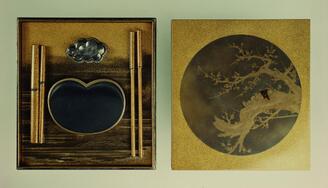
Whitezan Tosazu was born in Edo, and as a child, he studied various techniques such as ink painting and pottery. After working for a trading company and a commercial society during the Meiji period, he became a teacher at Tokyo Art School and was also appointed as an imperial artisan. His style is delicate and elegant, and you can see meticulous and refined ink painting techniques in his works.
白山松哉は江戸に生まれ、幼時から蒔絵・螺鈿などさまざまな技術を学んでいます。明治時代の貿易会社・起立工商会社に勤務したのち東京美術学校の教授となり、帝室技芸員にも任じられました。作風は繊細にして華麗で、本作にも精緻な研出蒔絵の技術を見ることができます。
View the original at Japan Search →A national statute written for one city. Article 1 recites the beauty of Kyoto and its historically, culturally and artistically important position in the world, and gives two purposes: to raise international culture and serve the ideal of permanent world peace, and to contribute to the economic recovery of Japan. It was passed five years after the war ended.
The cool part. Article 3 lets Kyoto designate culture tourism preservation districts and, by ordinance, prohibit building, rebuilding, removal, changes to the shape of the land and the cutting of bamboo, trees and stone, with compensation for ordinary loss. Then Article 4 does something statutes almost never do. It places a duty on the mayor personally: in the spirit of local autonomy, and with the cooperation of residents, the mayor must engage in ceaseless activity to complete the city. Nara received its own Act, number 250, the day before.
Verify at e-Gov 法令検索 →Use it A motif small enough to blind-deboss, which is where restraint actually shows.
Description source: museum curator text, translated — not generated