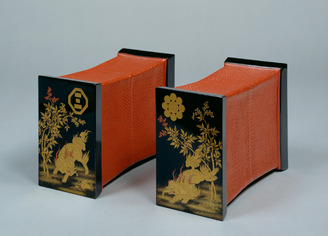
This is a pillow painted with gold powder and other materials on a lacquer surface. At both ends of the pillow, there is a painting of a dog that is believed to have eaten a bad dream, and a happy plant called nanten. Two of these pillows come as a set, and a crest is revealed, so it is thought to have been made as a wedding pillow for a daimyo (feudal lord).
漆に金粉などを使った豪華な蒔絵の枕です。枕の両端には、悪い夢を食べると信じられた獏と、やはりおめでたい植物であるナンテンが描かれます。2個でセットとされ、家紋もあらわされるため、大名家の結婚用に作られた祝い枕と考えられます。
View the original at Japan Search →Article 2 defines a museum as an institution that collects, keeps and displays materials on history, art, folklore, industry and natural science for public use, carries out research on them, and which has been registered under Chapter 2 of this Act. The registration is not decorative. In law, an unregistered collection open to the public is not a museum.
The cool part. The definition of keeping is given as including raising. That single parenthesis is why a zoo, an aquarium and a botanical garden sit inside museum law in Japan: the collection is allowed to be alive. Article 1 also grounds the statute in the Social Education Act and the Basic Act on Culture and the Arts, which places museums in education first and culture second.
Verify at e-Gov 法令検索 →Use it Palette for a single-colour run: one ink, heavy stock, nothing else on the sheet.
Description source: museum curator text, translated — not generated