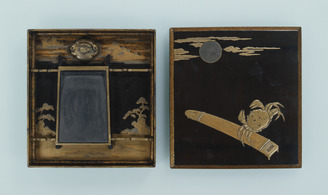
The lacquerware box has a black lacquer exterior with a crab and a koto (a type of Japanese musical instrument resembling a zither) depicted on it. The interior depicts the Inagi landscape. There is a poem in the Manyoshu collection about a crab living in Inagi being summoned to play the koto for the Emperor, only to be pickled instead. This may be related. The fact that the koto has eight strings also suggests a conscious effort to preserve old traditions.
蓋表は黒漆塗に高蒔絵で蟹と筝の琴を配し、内面は入江の景観を描いた硯箱。『万葉集』に、難波の入江に住む蟹が琴弾きとして帝に召されると思っていたら塩漬けにされる歌があり、これに関係するものでしょうか。筝が八絃であることも古制を意識しているように思われます。
View the original at Japan Search →Article 1 gives three grounds for regulating a sign: forming good landscape, maintaining scenic character, and preventing danger to the public. Article 3 then lets a prefecture prohibit outdoor advertising outright, by ordinance, in named categories of place.
The cool part. Read the list in Article 3 and it stops being an advertising law. The places where signage can be banned include landscape districts, scenic districts, preservation districts for groups of traditional buildings, the surroundings of designated Important Cultural Properties, and historic sites, places of scenic beauty and natural monuments. The statute protects the view by removing the sentences written across it.
Verify at e-Gov 法令検索 →Use it Take the ratio, not the picture. It sets a page better than a grid does.
Description source: museum curator text, translated — not generated