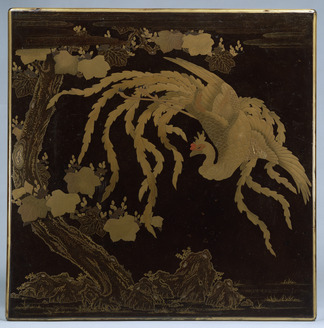
The proposal is a stand with a hosobana (small shock-shaped) folding screen attached. The hosobana screen is prepared with a small piece of paper on which prayers are written, placed in front of the shrine before the ceremony. The ceiling of the proposal stand is decorated with intricate gold and lacquer paintings featuring a turtle and a phoenix among bamboo branches. Among the lacquer paintings, this one is an excellent example in terms of composition and technique. Ruby: shukuban aokin kanakai.
祝案は祝版を載せる机。祝版は小さな衝立形で、祭儀の前日より祝文を記した紙を貼って備える。祝案の天板には金・青金の蒔絵に金貝や朱漆を交えて桐樹に鳳凰の図を入念に描いている。釈奠器の蒔絵の中でも、構図と技法が良くまとまった好例である。 ルビ:しゅくばん あおきん かなかい
View the original at Japan Search →Unusually for a Japanese statute it opens with a preamble, which states that finding joy in creating culture and living among it is an unchanging wish of people, and that culture contributes to world peace. Article 2 then sets the principles: the autonomy of those who make culture must be fully respected, and their creativity, standing and capacity considered.
The cool part. Article 2, paragraph 3 is the line worth reading twice. It says that creating and receiving culture is a right people are born with, and requires an environment in which citizens can appreciate, participate and create regardless of age, disability, economic situation, or the area they live in. Four barriers named in statute, one of which is your postcode. It puts the arts in the same grammatical register as infrastructure. Not a subsidy argued for each year, a standing obligation.
Verify at e-Gov 法令検索 →Use it Take the ratio, not the picture. It sets a page better than a grid does.
Description source: museum curator text, translated — not generated