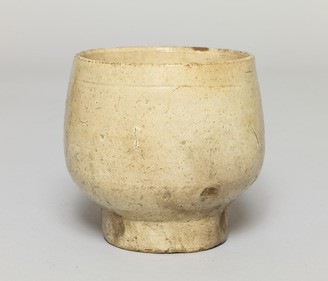
The high stand gives this unique vessel a tall silhouette, suggesting that it originally functioned as a ceremonial piece. Dressed in white clay make-up and transparent glaze, this "unglazed brush-decorated" bowl became valued as a Japanese tea bowl. Raindrops emerging here and there add to the scene.
高台が高く、全体に丸みを帯びた独特の器形から、この碗ももとは祭器であったと推測されます。灰茶色の胎全体を白土で化粧し、透明釉をかけた「無地刷毛目」のうつわで、日本に伝わり茶碗として珍重されました。ところどころに生じた雨漏りが景色となっています。
View the original at Japan Search →Article 1 states the purpose plainly: prevent trade in stolen goods, find them quickly, and speed the recovery of victims. Article 2 then defines a used article to include, in the same breath, art objects held for appreciation. Dealing in them requires a licence.
The cool part. Article 16 requires a dealer to record every transaction: the date, the item and quantity, its distinguishing features, and the address, name, occupation and age of the other party. Article 15 requires that a dealer who suspects an item is stolen report it to a police officer immediately. So the antique trade runs on a register the police may read, and a painting becomes a second-hand article the moment it has been used once.
Verify at e-Gov 法令検索 →Use it Two-colour foil on uncoated stock gets you most of this at production cost.
Description source: museum curator text, translated — not generated