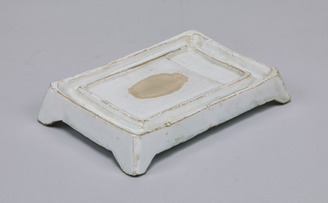
In the Joseon Dynasty, we call those in the upper class who followed Confucian education "Sonbi." Among them, those who had Sonbi education, were meticulous individuals. They kept simple taste in their study rooms filled with plain and unadorned stationery, and filled their interiors with a tranquil ambiance. There, they devoted themselves to deep thought, and cultivated a close relationship with painting and poetry.
朝鮮王朝の上流階級を両班といい、両班のなかでも儒教的な教養がある人物をソンビといいます。ソンビは清廉を心がけて、舎廊房のなかに簡素な美意識のある文房具を揃えて、室内を静謐な雰囲気で満たし、そこで思索にふけり、書画や詩文に親しみました。
View the original at Japan Search →Article 2 defines a museum as an institution that collects, keeps and displays materials on history, art, folklore, industry and natural science for public use, carries out research on them, and which has been registered under Chapter 2 of this Act. The registration is not decorative. In law, an unregistered collection open to the public is not a museum.
The cool part. The definition of keeping is given as including raising. That single parenthesis is why a zoo, an aquarium and a botanical garden sit inside museum law in Japan: the collection is allowed to be alive. Article 1 also grounds the statute in the Social Education Act and the Basic Act on Culture and the Arts, which places museums in education first and culture second.
Verify at e-Gov 法令検索 →Use it A motif small enough to blind-deboss, which is where restraint actually shows.
Description source: museum curator text, translated — not generated