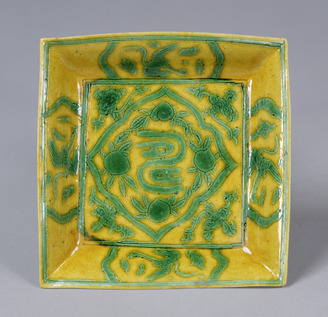
In the middle of the 16th century, during the Jiajing era, pottery made in Jingdezhen kilns began to be covered with thick layers of bright primary colors such as red, yellow, and blue. This could be seen as a response to the decline in the quality of raw materials for production, but the unique vibrancy and charm of these pieces is captivating.
16世紀中葉、嘉靖年間になると、景徳鎮官窯では、赤、黄、青などの濃い原色の上絵具で地を塗りつぶした器をつくるようになります。量産のため胎の質が低下したことに対する策の一つと考えられますが、独特の華やかさ、賑やかさが魅力となっています。
View the original at Japan Search →A statute built to coax privately held work onto public walls. An owner registers a piece with the Commissioner for Cultural Affairs, then contracts with a museum to display it. Article 2 defines a work of art broadly, as paintings, sculpture, crafts and other tangible cultural products that are movable, which is the legal way of saying anything you could carry out of the house.
The cool part. The terms are the interesting part. Article 2 requires the public display contract to run for five years or more, and to contain a clause stating that the parties may not give notice of cancellation. You cannot lend a masterpiece for the tax treatment and then reclaim it when the market turns. Japan concluded the barrier to seeing art was never storage. It was ownership, and the fix was a contract you cannot walk out of.
Verify at e-Gov 法令検索 →Use it Palette for a single-colour run: one ink, heavy stock, nothing else on the sheet.
Description source: museum curator text, translated — not generated