Quiet reading✦No ads, ever

✦Corporate brand & media services✦Made in Virginia Beach since 1997✦

Huang Goodman · Art Forgotten

Art Forgotten

Art from public museum collections. A mismatched real Japanese law, and some other factoids.

Every object, image and description comes from the museum's own catalogue record, and every object links to its original. Japanese records are machine-translated into English; the museum's Japanese is kept beside the translation because it is the authoritative form. Each law carries its official number and links to e-Gov 法令検索, the Japanese government's statute database.

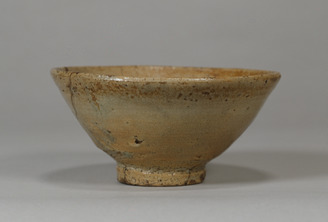
古井戸茶碗
{古井戸茶碗 · Koido type, Korea · 朝鮮時代・16世紀 / Joseon dynasty, 16th century · Japan Search · 国立国会図書館}
Old Ito tea bowl. This tea bowl was produced during the Ito period in Japan. The Ito period is known for its elegant and refined pottery. The exterior of the bowl is covered in a pale, off-white glaze. The glaze is smooth and even, with a slight yellowish tint. The interior of the bowl is left unglazed, revealing the natural color and texture of the clay. The clay is a rich, reddish-brown hue. The shape of the bowl is simple and rounded, with a small, flat base. The rim of the bowl is gently rounded, making it comfortable to hold and use. The bowl is adorned with a thin, darker band of glaze around the rim. This band adds a subtle contrast to the pale exterior glaze and creates a visual interest. The tea bowl is a beautiful example of Japanese ceramics from the Ito period. Its simple yet elegant design and natural, earthy colors make it a prized possession for any collector or tea enthusiast.

In comparison to Oidu, small dishes are called "Kobori-Oidu." The height is low, and the shape is vertically stacked like a bowl. The rim is smoothly finished. In the glaze, there are places where a bluish tint has seeped in, creating a unique scene with the cherries+biwa+color.

大井戸に比べ、小ぶりな碗を「小(古)井戸」と呼びます。高台は低めで、直線的に立ち上がった碗形で、削りはなめらかに整えられています。よく溶けて美しい枇杷+びわ+色を帯びた釉のなかにはところどころ青みがかったところがあり、独特の景色を生んでいます。

View the original at Japan Search →
The law
伝統的工芸品産業の振興に関する法律
Act on the Promotion of Traditional Craft Industries
昭和四十九年法律第五十七号 · Act No. 57 of 1974

A craft cannot call itself traditional by taste or reputation. Article 2 sets five conditions, all of which must hold: it is used mainly in daily life, the main part of its making is by hand, it is made by traditional techniques, it is made chiefly from materials traditionally used, and a not-small number of people in a defined area still make it. The designation names the techniques, the materials and the region.

The cool part. Two conditions do quiet work. The first is daily use, so a technique kept alive only for display does not qualify. The fifth is the number of makers: the law will not protect a single surviving genius, because one person is a biography and not an industry. And because the region is written into the designation, the craft is legally attached to a place and cannot move.

Verify at e-Gov 法令検索 →

Use it A motif small enough to blind-deboss, which is where restraint actually shows.

Description source: museum curator text, translated — not generated