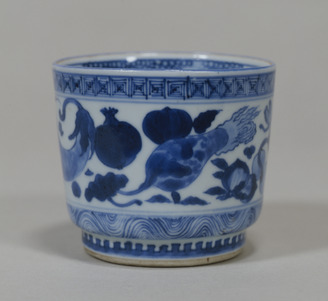
In Chinese Ming Dynasty, a pottery piece (keitoku chinyo) was made specifically for Japan. It depicts various vegetables and fruits such as peaches, zucchini, tsuki, kinoiko, kuwaibana, reishu, asatsuki, natamame, niniku, and hyoutan. Try exploring the connection between the objects and the "eggplant" (nasu) that came into being through the act of creation.
中国明時代、景徳鎮窯(けいとくちんよう)で日本向けに作られました。桃、ざくろ、つくし、きのこ、くわい、れいし、あさつき、なたまめ、にんにく、瓢箪(ひょうたん)など様々な野菜や果物が描かれています。物事を「成(な)す」にかけた縁起ものの「茄子」を探してみてください。
View the original at Japan Search →Article 1 states the purpose plainly: prevent trade in stolen goods, find them quickly, and speed the recovery of victims. Article 2 then defines a used article to include, in the same breath, art objects held for appreciation. Dealing in them requires a licence.
The cool part. Article 16 requires a dealer to record every transaction: the date, the item and quantity, its distinguishing features, and the address, name, occupation and age of the other party. Article 15 requires that a dealer who suspects an item is stolen report it to a police officer immediately. So the antique trade runs on a register the police may read, and a painting becomes a second-hand article the moment it has been used once.
Verify at e-Gov 法令検索 →Use it Palette for a single-colour run: one ink, heavy stock, nothing else on the sheet.
Description source: museum curator text, translated — not generated