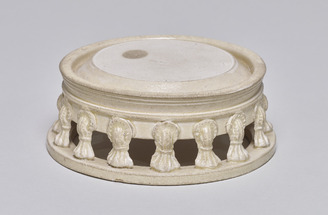
Examining the miniature items in the Jōmon Museum's collection, it is possible that this piece is somewhat larger in size and had the potential to be functional. Furthermore, the intricate and delicate decorative elements applied to the sides with circles and protrusions, as well as the shaped feet, distinguish this piece as a notable item within the collection.
常盤山文庫所蔵品のミニチュアの作例と比較すると一回り大きく、実用品であった可能性も考えられます。さらに、側面に施された圏線や凸線、脚部に型であらわされた複雑かつ細やかな装飾をそなえる点において、本作品は遺例のなかでも群を抜く優品といえます。
View the original at Japan Search →Article 1 states the purpose plainly: prevent trade in stolen goods, find them quickly, and speed the recovery of victims. Article 2 then defines a used article to include, in the same breath, art objects held for appreciation. Dealing in them requires a licence.
The cool part. Article 16 requires a dealer to record every transaction: the date, the item and quantity, its distinguishing features, and the address, name, occupation and age of the other party. Article 15 requires that a dealer who suspects an item is stolen report it to a police officer immediately. So the antique trade runs on a register the police may read, and a painting becomes a second-hand article the moment it has been used once.
Verify at e-Gov 法令検索 →Use it Two-colour foil on uncoated stock gets you most of this at production cost.
Description source: museum curator text, translated — not generated