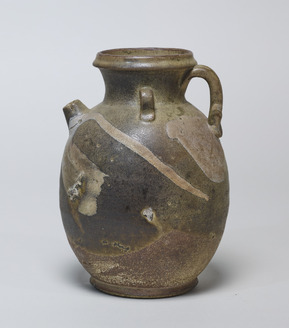
At a wide mouth, there is a short and small notch, which was popular during the late Tang Dynasty for water jars in the format of this type. In the Tang Dynasty, pottery became widely used as daily utensils both in China and abroad. Various characteristic products were produced in different regions. This piece is believed to have originated from Henan.
広口で、短く小さな注ぎ口の付いた姿は、唐時代後半に流行した水注の形式の一つ。陶磁器が日常の器として中国内外で広く使用されるようになった唐時代、南北各地で特色ある製品が盛んに焼かれました。この作品のような黒釉の器は河南産と考えられています。
View the original at Japan Search →A weapons statute that contains the most important art registry in the country. Article 2 defines a sword by measurement: a blade of fifteen centimetres or more for a sword, spear or naginata, five and a half for a dagger. Article 14 then carves out an exception. The prefectural board of education registers old firearms of value as art or antiques, and swords of value as art, on the basis of an appraisal by registration examiners appointed for their scholarly knowledge.
The cool part. A Japanese sword is lawful to own because it has been certified as art. Not because it was disarmed, not because it was licensed as a weapon. The judgement is made by the board of education, and Article 14 then requires the board to notify the prefectural public safety commission of what it has decided. The culture side rules, and the police are informed afterwards. Fail the appraisal and the same object becomes contraband.
Verify at e-Gov 法令検索 →Use it A motif small enough to blind-deboss, which is where restraint actually shows.
Description source: museum curator text, translated — not generated