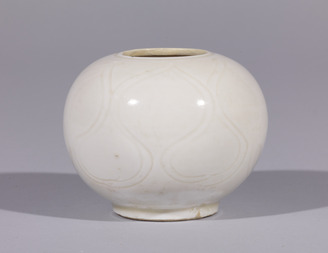
A white porcelain kiln representing Hebei was discovered in 1941 by ceramic researcher Mr. Smallwood in the current location of Hebei Province, Baoding City, Quyang County, Zhili Village. The bottom of this jar bears the inscription "New Official." Such marked items are frequently found not only at the excavation site but also at tombs and archaeological remains from the Northern Wei and Northern Song dynasties.
華北を代表する白磁窯、定窯は1941年に陶磁研究者小山冨士夫によって、現在の河北省保定市曲陽県澗磁村に発見されました。この壺の底部には「新官」と銘が刻まれています。刻銘を持つ資料は窯址のほか、遼墓や五代北宋期の遺跡出土品にも多くみられます。
View the original at Japan Search →It protects not the buildings but the setting that holds them. Article 2 defines historic landscape as land where structures and remains of historical significance form a single whole with the surrounding natural environment, which is the legal way of saying the hills, the approaches and the sightlines. The ancient capitals are Kyoto, Nara and Kamakura, plus any other municipality added by Cabinet Order. The Minister of Land, Infrastructure, Transport and Tourism designates a preservation area; city planning then carves a Special Preservation District over its core, and inside that district an owner needs permission from the prefectural governor to build, to fell timber, or to change the shape of the ground.
The cool part. It legislates the view, and then it pays for it. Article 10 requires the prefecture to compensate an owner who suffers loss because permission was refused. Article 12 goes further: where refusal seriously impairs the use of the land, the owner can require the prefecture to buy it, at market value. So the state does not merely tell you what the horizon behind a temple may look like. It agrees to purchase the land rather than let the skyline change. Two more things worth knowing. The prefecture must physically sign the district boundary, and a landowner may not obstruct the sign without just cause. And the ministry holding the pen is Transport, not Culture.
Verify at e-Gov 法令検索 →Use it Palette for a single-colour run: one ink, heavy stock, nothing else on the sheet.
Description source: museum curator text, translated — not generated