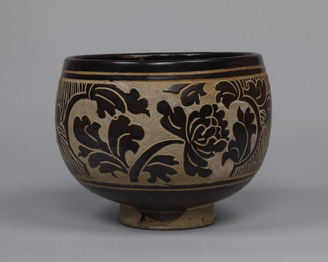
This piece exhibits a delicate green glaze covered with black glaze, revealing an obscure peony design created by scraping and dropping black glaze in the style of carving. Black glaze pottery prospered in China during the Song and Jin dynasties. It is believed that this particular work was fired in a kiln in the area of Tsuya, but it could also be linked to kilns in the Huabei region, specifically those in the area of Magu, where it was created.
薄茶色の陶胎に黒釉を掛けて、彫り文様と黒釉を搔き落とす手法でおおらかな牡丹文をあらわしています。宋から金、元時代にかけて、つやのある黒釉陶が隆盛しますが、本作品もそうした流れのなか、磁州窯に連なる華北の窯において焼かれたものと考えられます。
View the original at Japan Search →Article 1 describes the Ainu as the indigenous people of the northern part of the Japanese archipelago and of Hokkaido in particular, and cites international circumstances concerning indigenous peoples as a reason for acting. It requires the government to set a basic policy, and lets municipalities draw up regional plans for approval by the Prime Minister.
The cool part. The definition in Article 2 is the part to sit with. Ainu culture means the Ainu language, and the ways of living, music, dance, crafts and other cultural products inherited among the Ainu, and cultural products developed from these. That final clause refuses to freeze the culture at a date, and treats what is made next as equally the thing being protected. The Act then reaches into trademark law, reducing or waiving registration fees for regional collective trademarks used by approved projects.
Verify at e-Gov 法令検索 →Use it Palette for a single-colour run: one ink, heavy stock, nothing else on the sheet.
Description source: museum curator text, translated — not generated