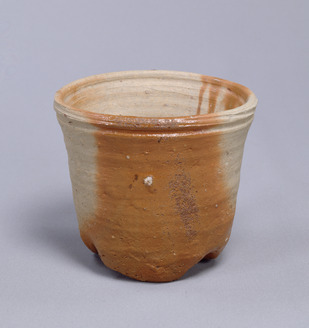
Representative earthenware from Bicchu in Kyoto reveals the distinctive features of the shaping period with its limited decorative techniques. This incense burner also has an ancestral form from the Chinese celadon kilns. The Bicchu potters of Peasantry in Kyoto boldly expanded the shaping of this piece. A new decorative technique called "kamidana-gama" was used with the addition of a "kamidana" kiln, resulting in the creation of this incense burner.
備前に代表される焼締陶は加飾の技法が少ないだけに造形の時代の特色が鮮明に現れる。この香炉も祖形は中国の青磁口寄香炉。桃山の備前の陶工はかくも大胆に造形を展開させた。そこに火襷という窯変を利用した新たな装飾の技が加わり、この香炉が生まれた。
View the original at Japan Search →Article 2 defines a museum as an institution that collects, keeps and displays materials on history, art, folklore, industry and natural science for public use, carries out research on them, and which has been registered under Chapter 2 of this Act. The registration is not decorative. In law, an unregistered collection open to the public is not a museum.
The cool part. The definition of keeping is given as including raising. That single parenthesis is why a zoo, an aquarium and a botanical garden sit inside museum law in Japan: the collection is allowed to be alive. Article 1 also grounds the statute in the Social Education Act and the Basic Act on Culture and the Arts, which places museums in education first and culture second.
Verify at e-Gov 法令検索 →Use it A motif small enough to blind-deboss, which is where restraint actually shows.
Description source: museum curator text, translated — not generated