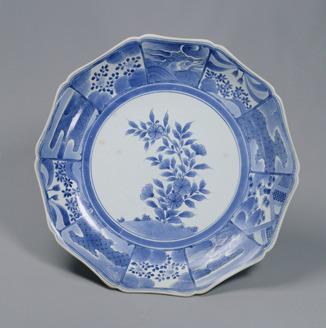
Chinese porcelain painter Iwanari created large dishes with depictions of peonies starting from the 1660s. In this dish, the border is designed to represent the traditional Japanese style. The painter skillfully utilized empty spaces, giving the painting-like quality a strong presence. The brushstrokes for the glazing are delicate, clearly illustrating new directions in Iwanari's glazing techniques.
中国の芙蓉手(ふようで)写しの大皿を作っていた伊万里は、1660年代以降、和様の表現を持つ精作を作り出す。この大皿では、周縁部を和様の表現とし、見込も余白を生かした絵画性の強い意匠とする。染付の筆致も繊細で、伊万里染付の新しい方向をよく示している。
View the original at Japan Search →Unusually for a Japanese statute it opens with a preamble, which states that finding joy in creating culture and living among it is an unchanging wish of people, and that culture contributes to world peace. Article 2 then sets the principles: the autonomy of those who make culture must be fully respected, and their creativity, standing and capacity considered.
The cool part. Article 2, paragraph 3 is the line worth reading twice. It says that creating and receiving culture is a right people are born with, and requires an environment in which citizens can appreciate, participate and create regardless of age, disability, economic situation, or the area they live in. Four barriers named in statute, one of which is your postcode. It puts the arts in the same grammatical register as infrastructure. Not a subsidy argued for each year, a standing obligation.
Verify at e-Gov 法令検索 →Use it Take the ratio, not the picture. It sets a page better than a grid does.
Description source: museum curator text, translated — not generated