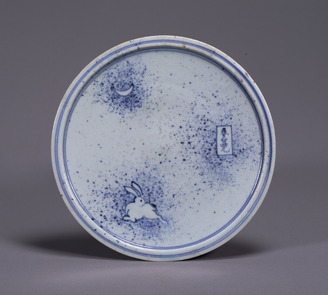
This early Edo period (around 1620-1630s) piece is believed to be one of the initial works of the Iwamiyaki, a type of pottery from the Iwami region. The design on its surface was inspired by the old Chinkankaku kiln's glaze. The monkey and the moon motif depicted in this piece is rendered with a dripping, precise style. Compared to other similar pieces, this unique style's charm is particularly evident in its lively expression. This characteristic cannot be found in Chinese porcelain's renditions of such motifs.
江戸前期、1620年代~30年代の作と推測される初期伊万里の中皿です。景徳鎮窯の古染付に手本をとった吹墨文様の月兎を表わしています。その瀟洒で的確な文様表現は、類品の中でも特に出来ばえがよく、楽しげな表情は中国陶磁には無い和様の魅力を醸し出しています。
View the original at Japan Search →Article 1 gives three grounds for regulating a sign: forming good landscape, maintaining scenic character, and preventing danger to the public. Article 3 then lets a prefecture prohibit outdoor advertising outright, by ordinance, in named categories of place.
The cool part. Read the list in Article 3 and it stops being an advertising law. The places where signage can be banned include landscape districts, scenic districts, preservation districts for groups of traditional buildings, the surroundings of designated Important Cultural Properties, and historic sites, places of scenic beauty and natural monuments. The statute protects the view by removing the sentences written across it.
Verify at e-Gov 法令検索 →Use it Take the ratio, not the picture. It sets a page better than a grid does.
Description source: museum curator text, translated — not generated