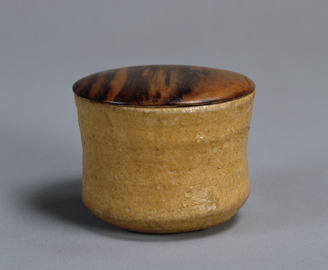
Hotsuke of Yellowsea is a utswa (clay object) from the Hiroshige era of the Hiroshi tradition within the world of Bizen ware. It stands out for its slim, well-proportioned shape. The glaze on it, which is a mixture of ash, imparts a yellow hue and makes it opaque. The rareness of such utswa in the hard, compact clay objects has added to its value.
黄瀬戸は美濃焼の中でも志野、織部に先駆けて焼かれたうつわです。薄く端正な形が特徴であり、そこに掛けられた灰釉が黄色味を帯びて失透性となったものが味わい深く、とくに珍重されてきました。懐石の組み物のうつわに優品が多く、酒呑も人気のひとつです。
View the original at Japan Search →Article 1 gives three grounds for regulating a sign: forming good landscape, maintaining scenic character, and preventing danger to the public. Article 3 then lets a prefecture prohibit outdoor advertising outright, by ordinance, in named categories of place.
The cool part. Read the list in Article 3 and it stops being an advertising law. The places where signage can be banned include landscape districts, scenic districts, preservation districts for groups of traditional buildings, the surroundings of designated Important Cultural Properties, and historic sites, places of scenic beauty and natural monuments. The statute protects the view by removing the sentences written across it.
Verify at e-Gov 法令検索 →Use it The border is the idea. Use it as an edge treatment and leave the centre empty.
Description source: museum curator text, translated — not generated