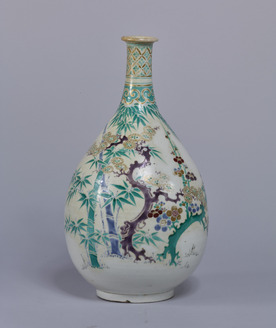
The white clay ground bears the vibrant colors of the Kyoto style, as well as the artisan's painting. It was once called "Daishouji Ninnsei" and considered one of the types of ancient Kawachi. At that time, popular designs were imitated across regions, as evidenced by the market demand.
白磁の素地に京焼風の色づかいと意匠の絵付けが施されています。かつては「大聖寺(だいしょうじ)仁清(にんせい)」とよばれ、古九谷の一種と考えられていました。当時市場で人気を博したデザインは、産地を越えて模倣が行なわれていたことがうかがわれます。
View the original at Japan Search →Article 1 describes the Ainu as the indigenous people of the northern part of the Japanese archipelago and of Hokkaido in particular, and cites international circumstances concerning indigenous peoples as a reason for acting. It requires the government to set a basic policy, and lets municipalities draw up regional plans for approval by the Prime Minister.
The cool part. The definition in Article 2 is the part to sit with. Ainu culture means the Ainu language, and the ways of living, music, dance, crafts and other cultural products inherited among the Ainu, and cultural products developed from these. That final clause refuses to freeze the culture at a date, and treats what is made next as equally the thing being protected. The Act then reaches into trademark law, reducing or waiving registration fees for regional collective trademarks used by approved projects.
Verify at e-Gov 法令検索 →Use it Palette for a single-colour run: one ink, heavy stock, nothing else on the sheet.
Description source: museum curator text, translated — not generated