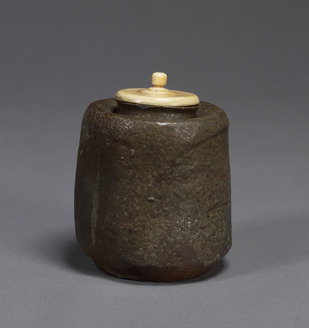
After being carved out at the chest part, the neck part looks as if it is sinking into the shoulders in this tea bowl. The distortion seen in popular forms such as watermark and floral motifs during that period is reflected in it. Despite its small size, it exudes a robust and stately presence.
胴部にヘラで削ったあとが見られ、頸部は肩に沈み込むような形をした茶入です。同時代に流行した、水指や花入などにみられる歪みの表現が反映されており、小品ながら備前らしい力強さをたたえています。
View the original at Japan Search →Article 1 sets a purpose larger than preservation: to preserve cultural properties AND to make use of them, contributing to the cultural advancement of the people and to the progress of world culture. Article 4 turns that outward. An owner must recognise the object as a precious national asset, preserve it for the public, and make it public as far as possible. Ownership here carries a duty to show.
The cool part. "Living National Treasure" appears nowhere in the statute. Article 71 requires that when an Important Intangible Cultural Property is designated, the minister must also certify its holder or holding group. Japan does not register the pot, it registers the potter. Article 96 is the one that reaches ordinary people: if you uncover a shell mound, a dwelling site or a tumulus, you must leave it exactly as it is and notify the Commissioner for Cultural Affairs without delay, and the Commissioner can freeze the ground for up to three months.
Verify at e-Gov 法令検索 →Use it Two-colour foil on uncoated stock gets you most of this at production cost.
Description source: museum curator text, translated — not generated