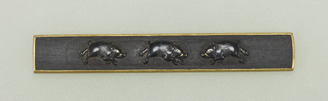
A small sheath is called "kobaku." It is used to store small blades such as knives. Decorative items have been made for the sheaths using various materials and craftsmanship. This piece is believed to be a work from the late Muromachi period, produced by the Hōjō clan for sword fittings. Three pigs are depicted in an orderly manner on it. (Special Issue_190102)
小柄とは、小刀*こがたな*とよばれる小さな刃物を収める柄のこと。刀装を飾るものとして様々な素材や意匠によって飾られました。これは後藤家という刀装具を制作していた一派の室町時代の作品と思われるもので、三匹の猪が整然とあらわされています。(特集初もうで_190102)
View the original at Japan Search →Article 1 gives three grounds for regulating a sign: forming good landscape, maintaining scenic character, and preventing danger to the public. Article 3 then lets a prefecture prohibit outdoor advertising outright, by ordinance, in named categories of place.
The cool part. Read the list in Article 3 and it stops being an advertising law. The places where signage can be banned include landscape districts, scenic districts, preservation districts for groups of traditional buildings, the surroundings of designated Important Cultural Properties, and historic sites, places of scenic beauty and natural monuments. The statute protects the view by removing the sentences written across it.
Verify at e-Gov 法令検索 →Use it Take the ratio, not the picture. It sets a page better than a grid does.
Description source: museum curator text, translated — not generated