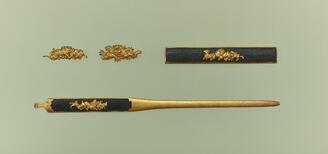
This set of three items consists of sword fittings with a unified and related material and craftsmanship, including mountings with a pommel, a small guard, and a tassel. In this work, the craftsman Isenosuke is seen in the tassels. There is a touch of whimsy in the movements of the animals, yet it possesses a refined elegance through the use of gold and copper alloy (copper and gold combined). (Special Issue _190102)
三所物とは目貫・小柄・笄で一組とする刀装具で、素材や意匠に統一性や関連性を持たせます。この作品は意匠を十二支としてイノシシは笄にみられます。動物たちの動きにはぎこちなさがあるものの、金と赤銅(銅と金の合金)を用いた格調の高さがあります。 (特集初もうで_190102)
View the original at Japan Search →Article 1 gives three grounds for regulating a sign: forming good landscape, maintaining scenic character, and preventing danger to the public. Article 3 then lets a prefecture prohibit outdoor advertising outright, by ordinance, in named categories of place.
The cool part. Read the list in Article 3 and it stops being an advertising law. The places where signage can be banned include landscape districts, scenic districts, preservation districts for groups of traditional buildings, the surroundings of designated Important Cultural Properties, and historic sites, places of scenic beauty and natural monuments. The statute protects the view by removing the sentences written across it.
Verify at e-Gov 法令検索 →Use it Palette for a single-colour run: one ink, heavy stock, nothing else on the sheet.
Description source: museum curator text, translated — not generated