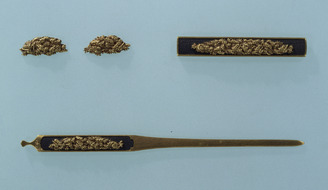
Japanese swords' fittings such as kinko, subame, and kozuka are called "sanposu" when they have authors, materials, and craftsmanship aligned. These sanposu, with over thirty dragons intertwined in the dragon pattern part, are identified as works of the Sengoku period armorsmith, Motonobu Hideyoshi. The dragons exist in various forms, radiating a lively presence from the past. (121 characters)
日本刀の刀装具である目貫・小柄・笄は、作者や素材、意匠が揃うことで「三所物」と呼ばれます。この三所物は、龍の文様部分が室町時代の装剣金工である後藤祐乗の作と鑑定されたもので、30匹もの龍がさまざまな姿で絡み合い、生々しいまでの存在感があります。(121字) るび めぬき こづか こうがい みところもの ごとうゆうじょう
View the original at Japan Search →Japan implementing the 1970 UNESCO Convention. When a foreign state reports that cultural property has been stolen from an institution, the Ministry of Foreign Affairs notifies the education ministry, which designates the object as specified foreign cultural property, after consulting the trade ministry. Importing a designated object then requires approval under the foreign exchange and trade law.
The cool part. Article 6 quietly rewrites private law. Under the Civil Code a good-faith purchaser is normally secure against a recovery claim after two years. For designated stolen foreign cultural property, the victim may demand recovery from two years after the theft until ten years have passed. Buying in good faith does not settle the question for a decade, which is roughly how long it takes a stolen object to surface on a legitimate market.
Verify at e-Gov 法令検索 →Use it A motif small enough to blind-deboss, which is where restraint actually shows.
Description source: museum curator text, translated — not generated