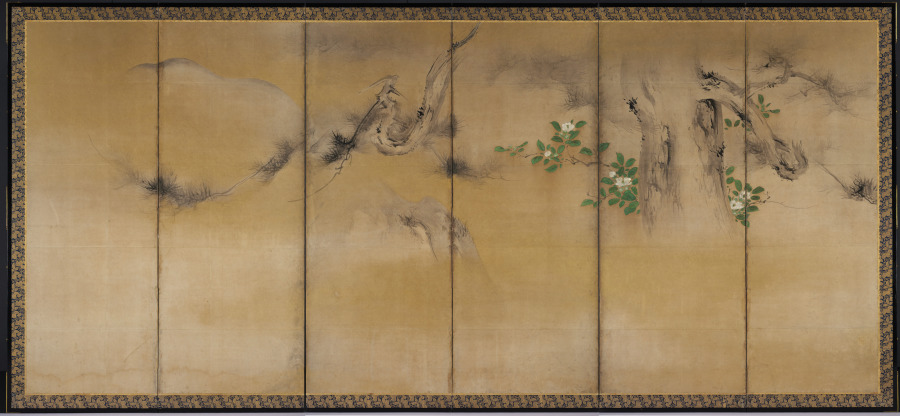
White camellias bloom behind a large pine in the right screen and blue morning glories creep through bamboo in the left screen of this composition. The mountains and bridge suggest a continuous landscape, but the paintings actually juxtapose flowers of winter and summer, with time progressing from right to left. Kaihō Yūshō painted similar landscapes for Zen temples in Kyoto.
View the original at Cleveland Museum of Art →Article 1 gives three grounds for regulating a sign: forming good landscape, maintaining scenic character, and preventing danger to the public. Article 3 then lets a prefecture prohibit outdoor advertising outright, by ordinance, in named categories of place.
The cool part. Read the list in Article 3 and it stops being an advertising law. The places where signage can be banned include landscape districts, scenic districts, preservation districts for groups of traditional buildings, the surroundings of designated Important Cultural Properties, and historic sites, places of scenic beauty and natural monuments. The statute protects the view by removing the sentences written across it.
Verify at e-Gov 法令検索 →Use it Palette for a single-colour run: one ink, heavy stock, nothing else on the sheet.
Description source: museum curator text — not generated