Huang Goodman · Art Forgotten

Art Forgotten

Art from public museum collections. A mismatched real Japanese law, and some other factoids.

Every object, image and description comes from the museum's own catalogue record, and every object links to its original. Japanese records are machine-translated into English; the museum's Japanese is kept beside the translation because it is the authoritative form. Each law carries its official number and links to e-Gov 法令検索, the Japanese government's statute database.

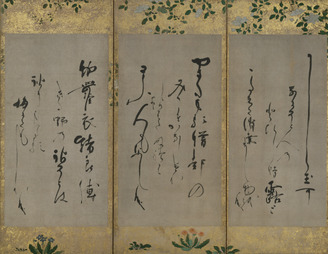
和歌屏風
{和歌屏風 · 近衛信尹筆 · 安土桃山~江戸時代・17世紀 / Azuchi-Momoyama–Edo period, 17th century · Japan Search · 国立国会図書館}
Screen painting in harmony with Japanese music This screen painting, a significant work of art in the realm of traditional Japanese culture, represents a harmonious fusion of music and visual art. The delicate brushstrokes and exquisite attention to detail convey a sense of tranquility and serenity, reflecting the deep connection between music and art in Japanese history. The intricate design elements and vibrant colors depict scenes of both the natural world and the human experience, transporting the viewer to a world of elegance and refinement. The screen, an essential element of Japanese interior decoration, not only functions as a decorative piece but also serves as a backdrop for the performance of traditional Japanese music, further emphasizing the interconnectedness of these two artistic expressions. · Near Emperor Sadanobu's Calligraphy Brush

This collection dynamically brings to life ancient Heian-era poems found in "Gokashi" and "Isizōshi." Each fan is written in a calligraphic style that changes from one to the next, making the composition suitable for contemplative viewing. The screens, serving as a "stage," reveal the confidence of the monk who created them.

「古今和歌集」や「伊勢物語」に取材した平安の古歌をダイナミックに揮毫する。屏風の特性を踏まえて各扇ごとに書風に変化をつけており、鑑賞を前提とした執筆姿勢が読み取れよう。屏風という「舞台」へ信尹の自信のほどが窺われる。

View the original at Japan Search →
The law
景観法
Landscape Act
平成十六年法律第百十号 · Act No. 110 of 2004

Article 1 states the aim as a beautiful and dignified national land, and it covers not only cities but farming, mountain and fishing villages. Inside a landscape planning area, Article 16 requires advance notification of new building, extension, rebuilding, relocation, and any repair or alteration that changes the exterior. Landscape Districts go further and impose direct restrictions on the form and design of buildings.

The cool part. Read Article 16 to the end of the sentence. A change of colour is listed alongside new construction as an act you must notify. Repainting your building is, in law, the same category of event as putting up a new one. This is the machinery behind the muted shopfronts of Kyoto. The brown coffee-shop sign is not a marketing choice, it is compliance.

Verify at e-Gov 法令検索 →

Use it A motif small enough to blind-deboss, which is where restraint actually shows.

Description source: museum curator text, translated — not generated