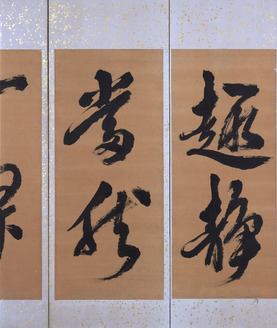
Saito Hakusawa was a scholar-painter during the middle period of the Edo era. He excelled in seal carving and pioneered innovations in this field. This work is a calligraphy piece made by copying characters and phrases from "The Preface to Lanling Garden," a famous work by Wang Xizhi. The strong brushstrokes of this piece can be compared to representative works of the Tang dynasty. According to the seal, this was created by Hakusawa when he was 70 years old.
細井広沢は、江戸時代中期の儒学者にして書家。篆刻を極めその革新に努めました。本作品は王羲之の名作「蘭亭序」から引用した字や句を行書で大書したものです。その力強い筆致は後に展開する唐様の書の代表的なものといえます。落款より広沢70歳の筆跡と知られます。
View the original at Japan Search →It protects not the buildings but the setting that holds them. Article 2 defines historic landscape as land where structures and remains of historical significance form a single whole with the surrounding natural environment, which is the legal way of saying the hills, the approaches and the sightlines. The ancient capitals are Kyoto, Nara and Kamakura, plus any other municipality added by Cabinet Order. The Minister of Land, Infrastructure, Transport and Tourism designates a preservation area; city planning then carves a Special Preservation District over its core, and inside that district an owner needs permission from the prefectural governor to build, to fell timber, or to change the shape of the ground.
The cool part. It legislates the view, and then it pays for it. Article 10 requires the prefecture to compensate an owner who suffers loss because permission was refused. Article 12 goes further: where refusal seriously impairs the use of the land, the owner can require the prefecture to buy it, at market value. So the state does not merely tell you what the horizon behind a temple may look like. It agrees to purchase the land rather than let the skyline change. Two more things worth knowing. The prefecture must physically sign the district boundary, and a landowner may not obstruct the sign without just cause. And the ministry holding the pen is Transport, not Culture.
Verify at e-Gov 法令検索 →Use it Take the ratio, not the picture. It sets a page better than a grid does.
Description source: museum curator text, translated — not generated