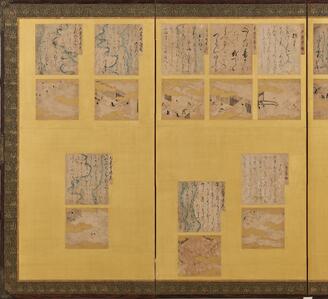
The "Tales of Genji" scrolls have handwritten articles extracted from each chapter, which the domestic government recorded on colored paper. The painting on the scene is pasted as a screen decoration. The artist who may be considered for the painting is Tosa Yoshitoshi, who is a traditional painter of the Tosa School, responsible for producing paintings for the imperial court. The intricacy of the drawing is notable.
『源氏物語』各帖を抜き書きした文章を公家が記した色紙と、その場面の絵画を屏風に貼り付けている。絵の作者と考えられる土佐光則は、宮廷の絵画制作を担う伝統的な流派である土佐派の絵師で、描写の細やかさが際立っている。
View the original at Japan Search →Article 1 gives three grounds for regulating a sign: forming good landscape, maintaining scenic character, and preventing danger to the public. Article 3 then lets a prefecture prohibit outdoor advertising outright, by ordinance, in named categories of place.
The cool part. Read the list in Article 3 and it stops being an advertising law. The places where signage can be banned include landscape districts, scenic districts, preservation districts for groups of traditional buildings, the surroundings of designated Important Cultural Properties, and historic sites, places of scenic beauty and natural monuments. The statute protects the view by removing the sentences written across it.
Verify at e-Gov 法令検索 →Use it The border is the idea. Use it as an edge treatment and leave the centre empty.
Description source: museum curator text, translated — not generated