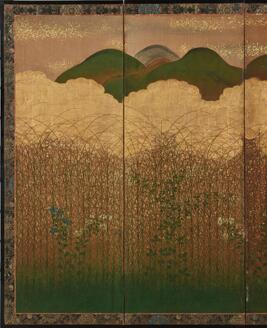
Musuem Catalogue: Kawasaki Plains refer to the western part of Edo period (from Tokyo City to Chiba Prefecture southward). The vast landscape with scattered woodlands on the vast plain, which has a scenic beauty that can be seen in "Manyoshu" (An Ancient Collection of Japanese Poems), has been cherished since ancient times and has been depicted in numerous Waka poems. This painting is considered to be a visual representation of that image.
武蔵野とは主に江戸の西部(東京都から埼玉県南部)にまたがる平野部のことです。広大なススキの原に雑木林が点在するという風情ある景色は、「万葉集」にも見えるなど古くから愛され、多くの和歌に詠まれました。本図はそのイメージを絵画化したものと考えられます。
View the original at Japan Search →Article 1 gives three grounds for regulating a sign: forming good landscape, maintaining scenic character, and preventing danger to the public. Article 3 then lets a prefecture prohibit outdoor advertising outright, by ordinance, in named categories of place.
The cool part. Read the list in Article 3 and it stops being an advertising law. The places where signage can be banned include landscape districts, scenic districts, preservation districts for groups of traditional buildings, the surroundings of designated Important Cultural Properties, and historic sites, places of scenic beauty and natural monuments. The statute protects the view by removing the sentences written across it.
Verify at e-Gov 法令検索 →Use it Take the ratio, not the picture. It sets a page better than a grid does.
Description source: museum curator text, translated — not generated