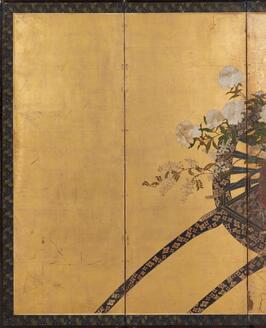
Ornate flower carts, decorated with gold (they can also be called flower viewing carts), each carrying five vehicles, are adorned with wisteria, peonies, azaleas, sunflowers, and various other seasonal flowers. The illustration of flower carts became popular in the Edo period mainly among the paintings of the Kanie School artists.
絢爛に金で装飾された花車(花見の車ともいいます)5輛それぞれに藤、牡丹、杜若(かきつばた)、紫陽花(あじさい)、菊など、四季の花々を載せています。花車図は江戸時代はじめ、大名家の間で人気のあったモティーフで、主に狩野派の絵師たちによって描かれました。
View the original at Japan Search →A national statute written for one city. Article 1 recites the beauty of Kyoto and its historically, culturally and artistically important position in the world, and gives two purposes: to raise international culture and serve the ideal of permanent world peace, and to contribute to the economic recovery of Japan. It was passed five years after the war ended.
The cool part. Article 3 lets Kyoto designate culture tourism preservation districts and, by ordinance, prohibit building, rebuilding, removal, changes to the shape of the land and the cutting of bamboo, trees and stone, with compensation for ordinary loss. Then Article 4 does something statutes almost never do. It places a duty on the mayor personally: in the spirit of local autonomy, and with the cooperation of residents, the mayor must engage in ceaseless activity to complete the city. Nara received its own Act, number 250, the day before.
Verify at e-Gov 法令検索 →Use it Palette for a single-colour run: one ink, heavy stock, nothing else on the sheet.
Description source: museum curator text, translated — not generated