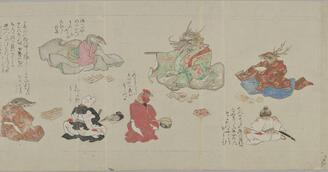
This is a picture book based on a story of twelve animals preparing for a fight, not all of whom are the twelve signs. The reason for the fight is depicted in the beginning of the book, where the twelve animals are holding a conference, so to speak. Enjoy the unusual appearances of the twelve animals, who dress up and behave like humans.
十二支の動物たちに、十二支ではない動物たちが戦いを仕掛けるお話に基づく絵巻です。戦いの原因となったのは絵巻の冒頭に描かれている、十二支が主催した歌合せでした。衣装を着けて人間のようにあらわされた、普段とは違う十二支の姿をお楽しみください。
View the original at Japan Search →Article 1 sets a purpose larger than preservation: to preserve cultural properties AND to make use of them, contributing to the cultural advancement of the people and to the progress of world culture. Article 4 turns that outward. An owner must recognise the object as a precious national asset, preserve it for the public, and make it public as far as possible. Ownership here carries a duty to show.
The cool part. "Living National Treasure" appears nowhere in the statute. Article 71 requires that when an Important Intangible Cultural Property is designated, the minister must also certify its holder or holding group. Japan does not register the pot, it registers the potter. Article 96 is the one that reaches ordinary people: if you uncover a shell mound, a dwelling site or a tumulus, you must leave it exactly as it is and notify the Commissioner for Cultural Affairs without delay, and the Commissioner can freeze the ground for up to three months.
Verify at e-Gov 法令検索 →Use it Palette for a single-colour run: one ink, heavy stock, nothing else on the sheet.
Description source: museum curator text, translated — not generated