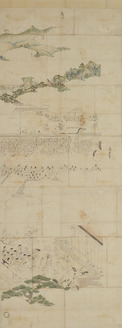
The seasons from spring (right) to summer (left) are depicted. On the right end, the ceremony for the beginning of the year (Yumi Hajime) at the Fujiwara military compound is shown. Cherry blossoms bloom at the Imperial Palace (Kyoto-go), and on the left, the procession during the summer festival at Fujiwara's Fujiwara-no-Yamaboko Matsuri is depicted. This theme served as the basis for the Rokujo-e (scrolls of the six provinces).
京都の春(右)から夏(左)の年中行事が描かれている。右端の足利将軍邸で正月の弓始(ゆみはじめ)の儀式が行われている。京都御所(皇居)には桜が咲き、左方で夏祭りの祇園祭の山鉾(やまぼこ)巡行が描かれている。洛中洛外図の根源となった画題である。
View the original at Japan Search →Unusually for a Japanese statute it opens with a preamble, which states that finding joy in creating culture and living among it is an unchanging wish of people, and that culture contributes to world peace. Article 2 then sets the principles: the autonomy of those who make culture must be fully respected, and their creativity, standing and capacity considered.
The cool part. Article 2, paragraph 3 is the line worth reading twice. It says that creating and receiving culture is a right people are born with, and requires an environment in which citizens can appreciate, participate and create regardless of age, disability, economic situation, or the area they live in. Four barriers named in statute, one of which is your postcode. It puts the arts in the same grammatical register as infrastructure. Not a subsidy argued for each year, a standing obligation.
Verify at e-Gov 法令検索 →Use it The border is the idea. Use it as an edge treatment and leave the centre empty.
Description source: museum curator text, translated — not generated