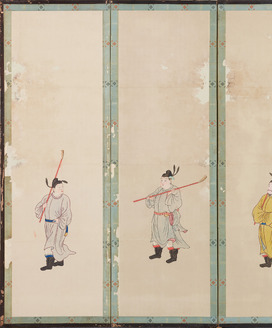
The Byobu, or folding screens, of the Great Song dynasty were placed near the emperor during various court ceremonies in the imperial palace. They feature Chinese-style figures depicted with a cane called a "jade staff," and there are two types: the standing pose and the horseback pose. It is a possibility that this screen is a part of the Great Song screen produced in the Cultural Year 14 (1817) at the imperial palace.
大宋屏風は宮中での様々な儀式の際、天皇のそば近くに立てられる屏風のこと。毬杖と呼ばれる、ポロのような競技をする中国風の人物が描かれており、立姿と馬上姿の二種があります。本屏風は文化14年(1817)に宮中で制作された大宋屏風の一部の可能性があります。ぎっちょう/
View the original at Japan Search →Article 1 describes the Ainu as the indigenous people of the northern part of the Japanese archipelago and of Hokkaido in particular, and cites international circumstances concerning indigenous peoples as a reason for acting. It requires the government to set a basic policy, and lets municipalities draw up regional plans for approval by the Prime Minister.
The cool part. The definition in Article 2 is the part to sit with. Ainu culture means the Ainu language, and the ways of living, music, dance, crafts and other cultural products inherited among the Ainu, and cultural products developed from these. That final clause refuses to freeze the culture at a date, and treats what is made next as equally the thing being protected. The Act then reaches into trademark law, reducing or waiving registration fees for regional collective trademarks used by approved projects.
Verify at e-Gov 法令検索 →Use it Take the ratio, not the picture. It sets a page better than a grid does.
Description source: museum curator text, translated — not generated